Cottage tiny homes combine storybook aesthetics with minimalist living, offering a practical alternative to sprawling suburban houses and stark modern micro-dwellings. These homes typically max out around 400 square feet but pack in architectural details like gabled roofs, vertical siding, and shuttered windows that echo traditional cottage design. They’re showing up on foundations, trailers, and ADU lots across the country, appealing to retirees downsizing, remote workers chasing affordability, and anyone who’d rather invest in experiences than square footage. Understanding what defines this style, how much it costs, and where you can legally park one will determine whether a cottage tiny home is the right move.
Table of Contents
ToggleKey Takeaways
- Cottage tiny homes under 400 square feet combine traditional architectural details like gabled roofs and board-and-batten siding with practical minimalist living, making them more appealing to zoning boards and HOAs than modern sleek alternatives.
- A cottage tiny home’s steep roof pitch (often 8:12 to 10:12) provides usable loft space, better snow/rain drainage, and improved climate performance compared to flat-roofed tiny home designs.
- Building a cottage tiny home DIY costs $20,000 to $40,000 in materials ($60,000+ with high-end finishes), while professionally built models range from $50,000 to $150,000 depending on size, location, and off-grid systems.
- Zoning and permits are the biggest obstacles—foundation-based cottage tiny homes require standard building permits, while trailer-based models occupy a legal gray area that varies dramatically by jurisdiction.
- Financing cottage tiny homes is challenging; foundation-based models may qualify for construction-to-permanent loans, while trailer-based versions are financed as RVs with higher interest rates (7-12%) and shorter terms (10-15 years).
- Standard homeowners insurance often excludes homes under 400 square feet, requiring specialty tiny home policies or RV insurance—secure insurance coverage early before construction begins.
What Is a Cottage Tiny Home?
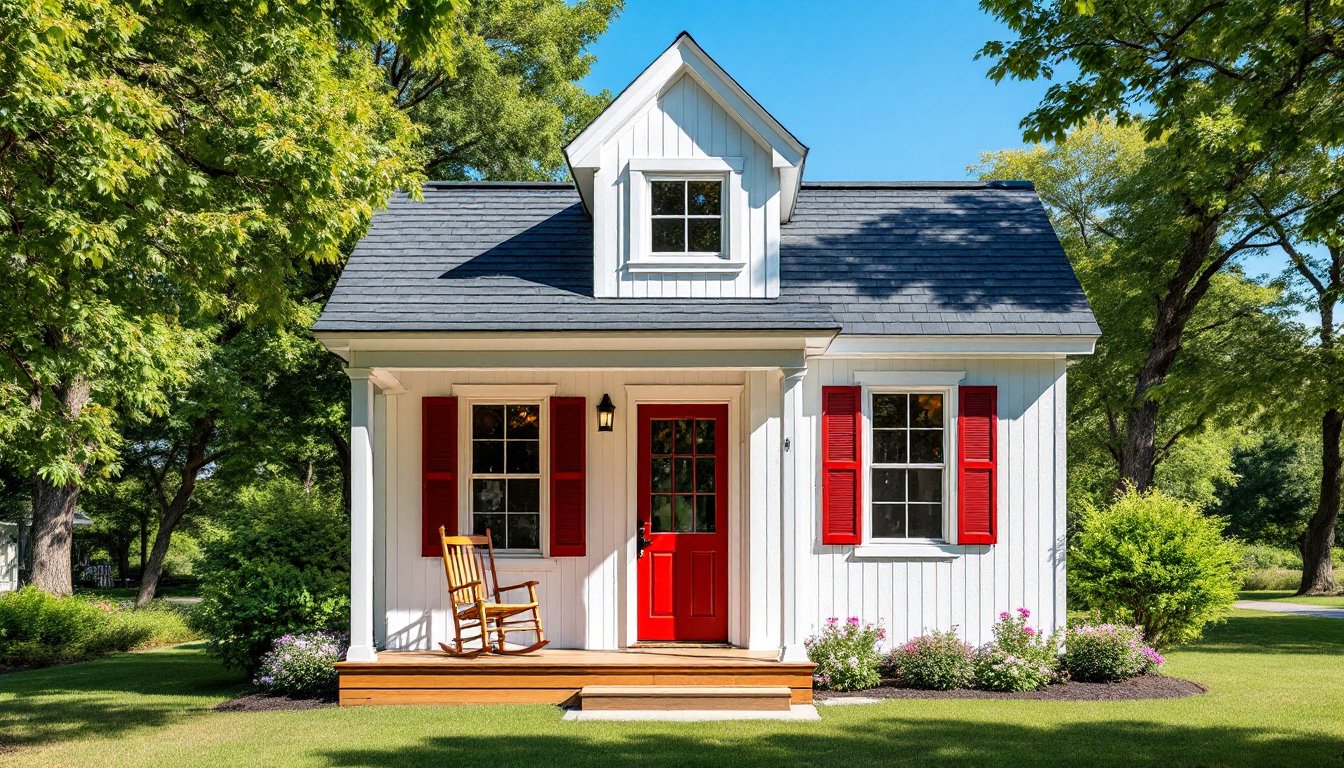
A cottage tiny home is a dwelling under 400 square feet that borrows visual and functional cues from English and American cottage architecture. Unlike modern minimalist tiny homes with clean lines and industrial finishes, cottage-style builds lean into cozy, traditional details: pitched roofs, board-and-batten or lap siding, multipane windows, and covered porches.
Most measure between 100 and 400 square feet of conditioned interior space. They can sit on permanent foundations (making them legally a dwelling or ADU in many jurisdictions), on RVIA-certified trailers (which classify them as recreational vehicles in some areas), or on skids for semi-permanent placement. The cottage aesthetic works across all three formats.
Key structural differences from other tiny homes include steeper roof pitches (often 8:12 or 10:12) to accommodate lofts and improve snow load performance, and the frequent use of dormer windows to add headroom and natural light in sleeping lofts. Framing is typically 2×4 or 2×6 studs on 16-inch centers, same as conventional residential construction, making them easier to insure and finance in some markets than non-traditional builds.
Why Choose a Cottage Tiny Home Over Other Styles?
Cottage tiny homes appeal to buyers who want small-footprint living without the industrial or ultra-modern look that dominates the tiny house movement. The style offers better resale potential in rural and suburban markets where traditional home aesthetics are preferred, zoning boards and HOAs are often more receptive to a structure that looks like a miniature house than a sleek shipping container conversion.
From a practical standpoint, the pitched roof and gable design provide more usable loft space compared to flat or shed-style roofs. A 10:12 pitch on a 20-foot-wide structure gives you standing height in the center of the loft, making it a real bedroom instead of a crawl-in bunk. You also gain better ventilation and the option to install a ridge vent for passive cooling.
Cottage designs handle diverse climates well. The steep roof sheds snow and rain efficiently, and traditional construction methods (as opposed to SIPs or advanced framing) make it easier to find local contractors familiar with the techniques. Many cottage tiny home plans also include covered porches, which extend livable outdoor space and provide a buffer zone for muddy boots, wet dogs, or seasonal storage, something modern tiny homes often skip.
Another factor: cottage aesthetics photograph well, which matters if you’re planning to use the home as a vacation rental. Properties with distinctive architectural character tend to book faster and command higher nightly rates on short-term rental platforms, assuming local zoning allows it.
Design Elements That Define Cottage Tiny Homes
Exterior Features and Curb Appeal
Exterior materials set the tone. Vertical board-and-batten siding is a cottage hallmark, typically installed with 1×10 or 1×12 boards and 1×2 or 1×3 battens over the seams. Lap siding (also called clapboard) in cedar, fiber cement, or engineered wood is another common choice. Fiber cement (like HardiePlank) offers better durability and lower maintenance than wood, especially in wet climates, though it’s heavier, important if you’re building on a trailer with a 10,000-pound GVWR limit.
Roof materials range from architectural asphalt shingles (budget-friendly, ~300 pounds per square for a typical tiny roof) to metal standing seam (lighter, longer-lasting, better for snow shedding, but 2–3x the cost). Avoid standard three-tab shingles: they don’t hold up as well on steep pitches and look cheap.
Windows make or break the cottage look. Double-hung or casement windows with divided lites (individual panes, real or simulated) are traditional. Functionally, casement windows offer better ventilation control and tighter seals than sliders. Install at least one egress-compliant window in any sleeping loft, IRC code requires a minimum 5.7 square feet of openable area and a 24-inch-high by 20-inch-wide clear opening. Check local amendments: some jurisdictions don’t apply IRC egress rules to tiny homes under 400 square feet, but it’s still a smart safety move.
Front porches are non-negotiable for the cottage vibe. Even a 4×6-foot covered stoop adds usable square footage and weather protection. Use pressure-treated lumber (rated for ground contact, .40 or .60 retention) for porch framing and joists. Composite decking works for the surface, but real wood (cedar or treated pine) looks more authentic and is easier to repair.
Interior Design and Space Optimization
Inside, cottage tiny homes favor warm materials and built-in furniture over modular pieces. Shiplap or tongue-and-groove pine paneling on walls and ceilings adds texture and hides minor framing irregularities (common in trailer-based builds). Paint it white or a soft pastel to keep spaces from feeling cramped: stain or clear-coat works in larger models or if you have abundant natural light.
Storage is vertical and multifunctional. Build floor-to-ceiling cabinets with 3/4-inch plywood carcasses and face frames from 1×2 poplar or pine. Use every inch under stairs, drawers, pull-outs, or cubbies. A staircase to the loft (instead of a ladder) takes up about 16 to 20 square feet but is safer and code-compliant in most permanent installations. Alternating tread stairs (also called ship’s ladders) split the difference, using roughly 12 square feet while still providing something to grip.
Kitchens in cottage tiny homes often include a 24-inch range (apartment-sized, available from most major appliance brands), a 12- or 18-cubic-foot refrigerator, and an undermount or farmhouse sink in a 24- to 30-inch base cabinet. Butcher block countertops suit the cottage aesthetic and are easier to install and repair than stone, though they require regular oiling. Plan for 15 to 20 inches of counter space on at least one side of the sink, enough to prep a meal without constantly shuffling cutting boards.
Bathrooms squeeze into 25 to 35 square feet. A standard 60×30-inch tub/shower combo fits if you go with a traditional layout: a 32×32-inch corner shower saves about 6 square feet. Composting or incinerating toilets avoid the need for a septic connection if you’re off-grid, but most buyers prefer a standard round-front toilet (takes up 2 inches less depth than elongated) on a traditional plumbing system for resale value.
Cost Breakdown: Building vs. Buying a Cottage Tiny Home
DIY builds for a basic 200-square-foot cottage tiny home typically run $20,000 to $40,000 in materials, assuming you’re providing all labor and have access to tools. That includes framing lumber, sheathing, insulation, siding, roofing, windows, doors, electrical rough-in materials, plumbing fixtures, and basic interior finishes. A trailer (if not on a foundation) adds $4,000 to $7,000 for a dual-axle unit rated to handle the load. High-end finishes, custom cabinetry, or a standing-seam metal roof can push costs toward $60,000.
Professionally built models from regional builders or national companies range from $50,000 to $100,000+ depending on size, materials, and whether it’s delivered turnkey or as a shell. Builders in lower-cost-of-living areas (parts of the South and Midwest) tend to price at the lower end: West Coast and Northeast builders often charge more due to labor rates and local code requirements. A finished 400-square-foot model with off-grid systems (solar, composting toilet, rainwater collection) can hit $120,000 to $150,000.
Deciding between building or buying a tiny home depends on your skill level and time. Framing, roofing, and electrical/plumbing rough-in are straightforward if you’ve done residential remodeling, but expect 800 to 1,200 hours of labor for a competent DIYer working solo. Hiring out specialty trades (HVAC, electrical finish, tile work) while doing the rest yourself is a middle-ground approach that keeps costs reasonable and ensures code compliance on the critical systems.
Financing is trickier than conventional mortgages. If the home is on a permanent foundation and meets local building codes, some lenders offer construction-to-permanent loans or treat it as an ADU, qualifying for conventional financing. Trailer-based models are usually financed as RVs or personal property, with higher interest rates (7% to 12% as of 2026) and shorter terms (10 to 15 years). A few credit unions and specialty lenders now offer tiny-home-specific loans, shop around and read the fine print on titling and insurance requirements.
Zoning, Permits, and Legal Considerations
Zoning is the biggest hurdle. Most municipalities regulate tiny homes under one of three categories: accessory dwelling units (ADUs), recreational vehicles (RVs), or permanent single-family dwellings. Cottage tiny homes on foundations generally fall under ADU or dwelling codes, requiring building permits, inspections, and compliance with IRC (International Residential Code) minimums, though many jurisdictions have amended the IRC to allow smaller dwelling sizes.
Trailer-based cottage tiny homes occupy a gray area. Some jurisdictions treat them as RVs, limiting where and how long you can park them (often 30 to 180 days without a special permit). Others prohibit RVs as primary residences entirely. A handful of progressive counties and cities have created tiny-home-specific zoning overlays or allow them in designated villages or co-housing developments, research your local planning department early and get it in writing.
Permits depend on classification. Foundation-based builds require the same permits as any new construction: building, electrical, plumbing, and mechanical. Expect plan review fees, impact fees (if applicable), and multiple inspections (footing, framing, insulation, final). Total permit costs vary wildly, anywhere from $500 in rural counties to $5,000+ in strict coastal cities. Trailer-based models may not require a building permit if classified as RVs, but you’ll still need electrical and plumbing sign-offs if connecting to utilities, and many jurisdictions now require RVIA or NOAH certification for any towable dwelling.
Utility connections add another layer. Grid-tied electric service requires a meter base, service panel, and inspection by the local utility and building department. Well and septic permits (if off-grid or rural) involve percolation tests, health department approvals, and setback requirements, budget $3,000 to $10,000 for a basic septic system, more in challenging soils. If you’re connecting to municipal sewer and water, tap fees range from a few hundred dollars to several thousand depending on the system.
Insurance can be tough to source. Standard homeowners policies often exclude dwellings under 400 square feet or homes on wheels. Some insurers offer tiny home endorsements or specialty policies, and RV insurance works for certified trailer models, though coverage limits and replacement cost calculations differ significantly. If you’re financing the build, the lender will require proof of insurance before releasing funds, line this up during the planning phase, not after you’ve started building.